
Damascus Steel Makes The Hublot Big Bang Unico Gourmet Unmistakable
The most memorable feature of the Hublot Big Bang Unico Gourmet is not the chronograph. It is the metal surrounding it. Damascus steel is familiar from high-quality kitchen knives, where layered or pattern-welded construction produces flowing bands across the surface. Putting that kind of visual texture on a modern sports watch changes the character of a case that already draws attention through size and angularity.
The Gourmet edition was introduced in connection with Hublot’s interest in contemporary gastronomy. That partnership gives the material choice a narrative context, but the design deserves to be evaluated without the marketing story. A patterned case needs a careful balance: too much texture can obscure the lines of the lugs, while too little makes the treatment seem ornamental rather than integral to the watch. In the Big Bang, the broad case sides provide enough surface for the pattern to remain visible.

The case is the subject, not just the setting
Compare the surfaces nearest the crown and pushers with the broad planes of the bezel. The important question is whether the pattern follows the physical form of the watch. A photograph taken directly from above can make almost any decorative pattern look coherent; a three-quarter view reveals whether the pattern continues naturally around the case. The original concept depends on patterned metal, not on a printed illustration of the same effect.
That distinction matters to anyone studying Hublot replica case construction. A photograph can suggest a Damascus-style surface but cannot establish the material’s manufacturing process. Similarly, the presence of a skeletonised dial does not authenticate the movement beneath it. For this reason we treat visual interpretation, stated materials and proven mechanical specifications as three separate questions rather than assuming one establishes the others.
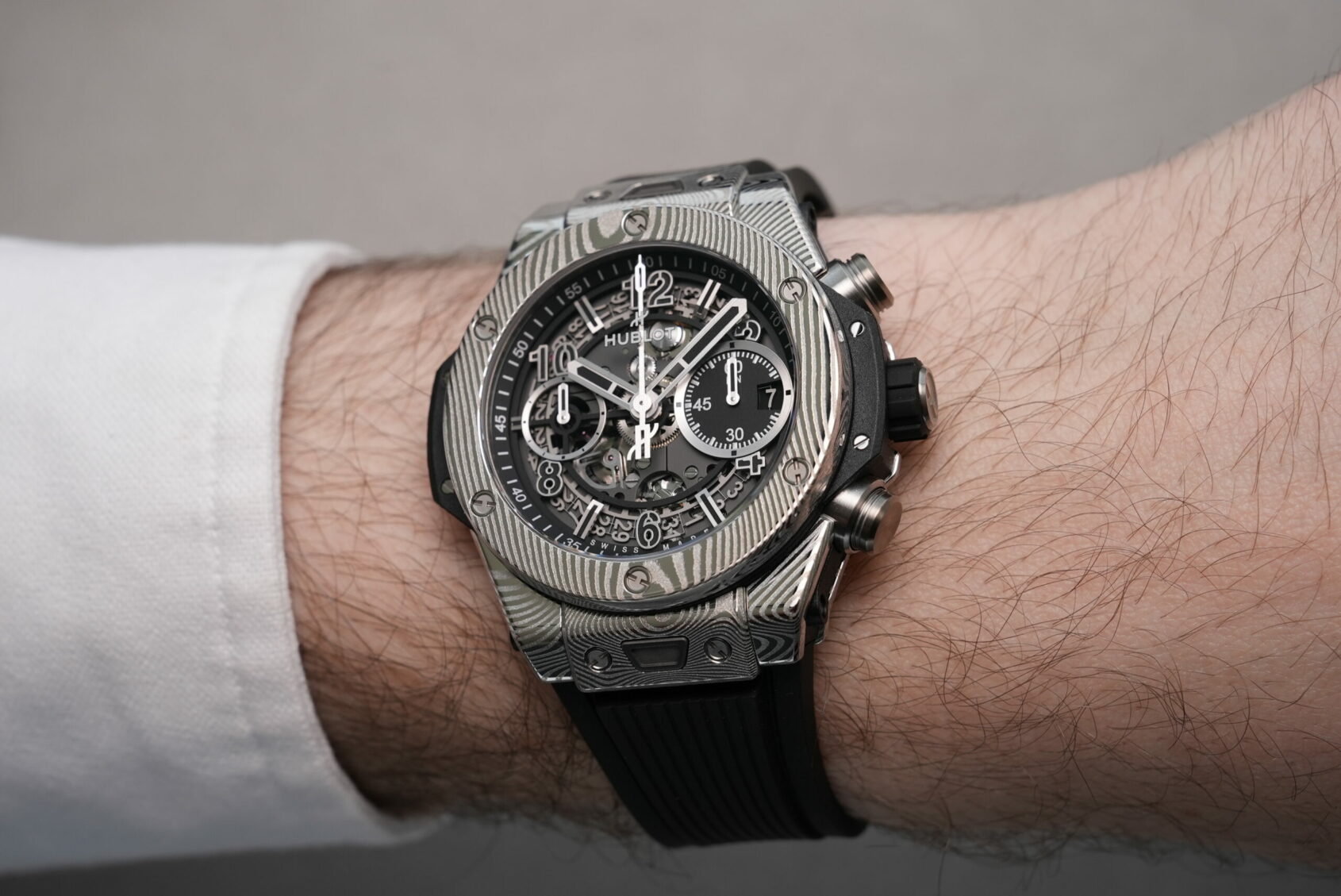
The Gourmet also illustrates how Hublot uses the Big Bang Unico as a platform rather than a fixed aesthetic. Colour, texture and materials can change substantially while the bezel screws, case outline and chronograph dial remain familiar. On the wrist, however, those choices do change the way a watch reads: a patterned case draws the eye outward, while a monochrome reference such as Essential Grey pushes attention back towards the dial.
A useful way to examine the photographs
Start with the central dial and work outwards. Locate the hands and registers against the openworked layers, then look at the bezel ring, the pushers and the meeting point between the strap and the case. This sequence makes it easier to judge visual balance without allowing the most dramatic texture to dominate the assessment.
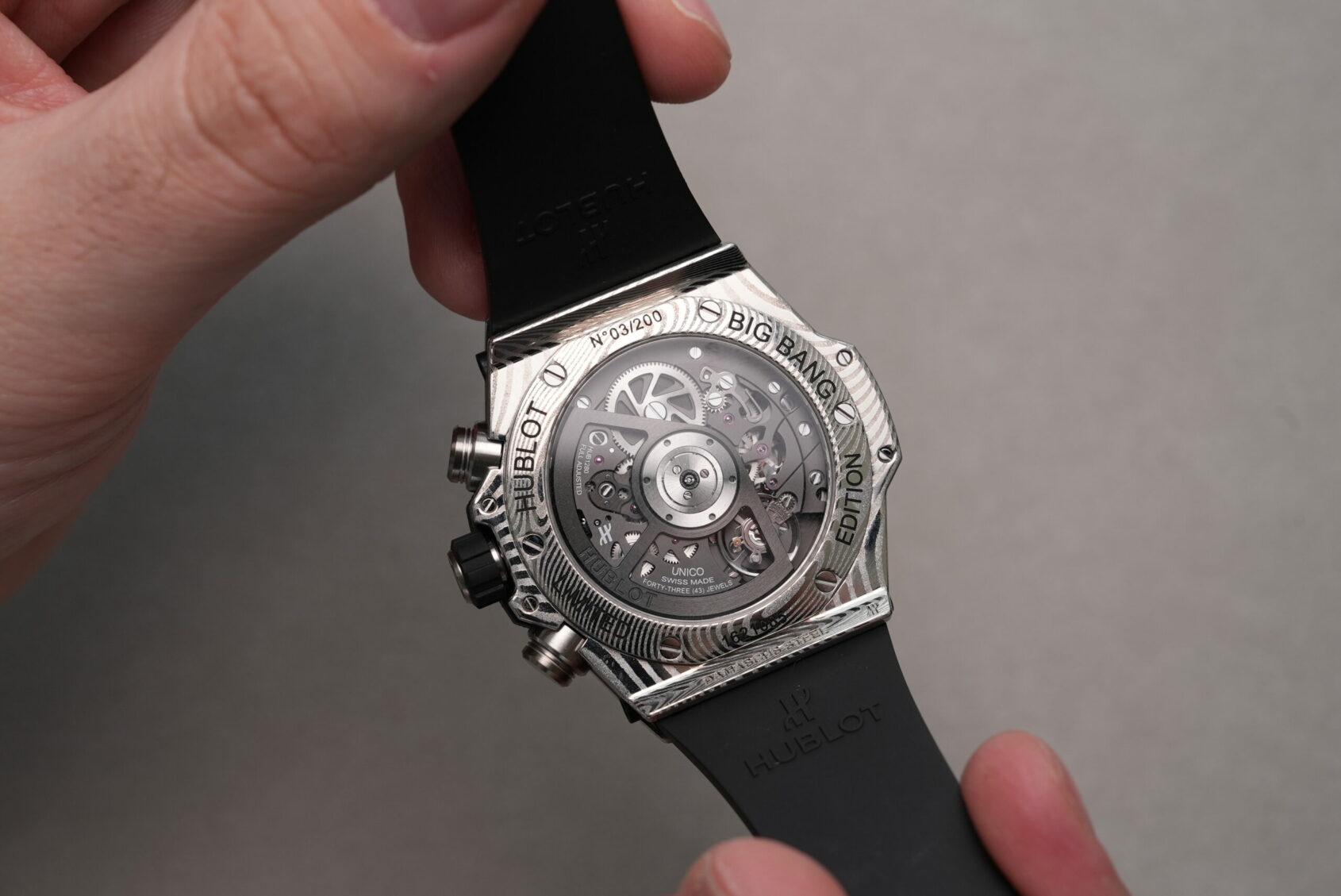
One final caution concerns the phrase ‘hands-on’. This piece draws on the watch’s design and imagery rather than documented ownership or physical inspection. We cannot infer the exact calibre, case alloy, resistance to water or long-term durability of any replica from images alone. Those claims require direct, reference-specific evidence.
Our Perfect Replica UK watch journal covers the design questions raised by these models, while the Hublot replica and model archive puts this unusual metal treatment alongside other Big Bang interpretations. Gourmet’s lasting interest comes from that material experiment: the pattern changes how the entire case is read, rather than merely decorating an otherwise ordinary watch.