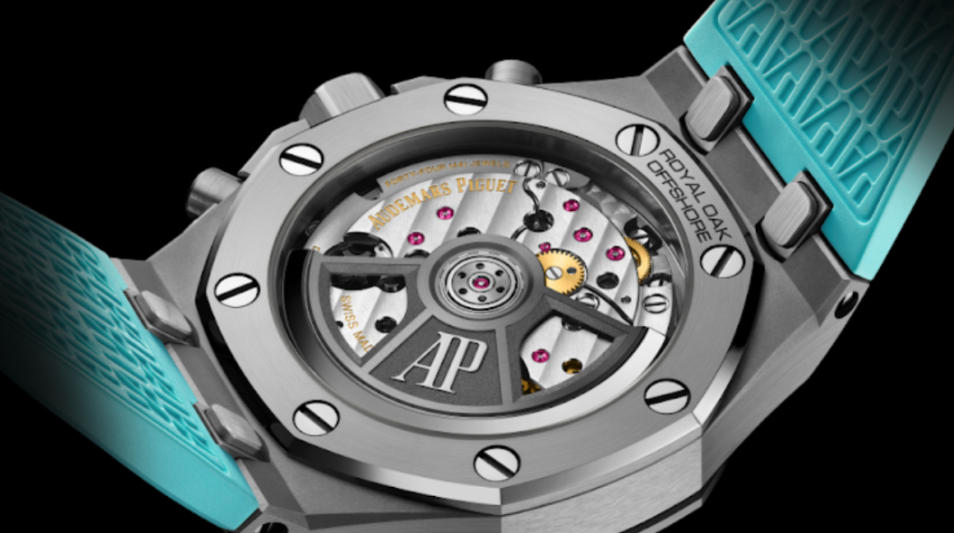
Why The Audemars Piguet Royal Oak Offshore Looks So Substantial
The Royal Oak Offshore is often described as a larger Royal Oak, but that shorthand misses what makes the design so distinctive. The Offshore does not simply enlarge the original’s octagonal bezel and integrated-bracelet idea. It increases the sense of depth, separates components more dramatically and gives its chronograph architecture a physical presence that is visible before the details are read.

This is especially clear around the bezel. On the Royal Oak, the eight-sided surround is already a recognisable symbol; on the Offshore, it competes with thicker case elements, pushers and a more heavily layered dial. The relationship between those surfaces gives the watch its force. When a copy gets the bezel outline right but flattens everything beneath it, the result loses much of the design’s character.
Proportion matters more than a model name
Some photographs of Royal Oak Offshore replica watches appear convincing because the bezel shape is unmistakable. A more careful examination compares the distance from crystal to case edge, the height of the crown guards and the transition towards the strap. Those are not decorative extras. They tell the eye whether the components belong to a coherent structure.

The dial requires a separate reading. Applied markers, chronograph registers, text and patterned surfaces can create a crowded composition. A successful layout leaves enough separation for the hands to be understood at a glance. A single glossy photograph may conceal crowded printing or misaligned registers, so multiple angles are more useful than another advertising phrase about accuracy.
A reader’s visual checklist
- Does the octagonal bezel sit in convincing proportion to the case body?
- Are the pushers, crown area and guards correctly integrated with the profile?
- Do the hands remain legible against the dial pattern?
- Does the strap meet the case without an awkward break in geometry?

These questions apply to visual design; they do not establish movement origin, material quality, durability or water resistance. Similarly, there is no basis for calling an image-based comparison a hands-on review unless a physical watch has been inspected. A reader gets more value from a limited but honest assessment than from a confident technical claim unsupported by evidence.

The Offshore is worth studying because it shows how Audemars Piguet turned an already powerful design into an intentionally more muscular chronograph. Our UK watch design journal uses that question as a starting point, while the Royal Oak and Offshore editorial collection places this reference family within its wider design language. The emphasis should remain on proportion and construction, not on a promise that any replica is identical to its inspiration.